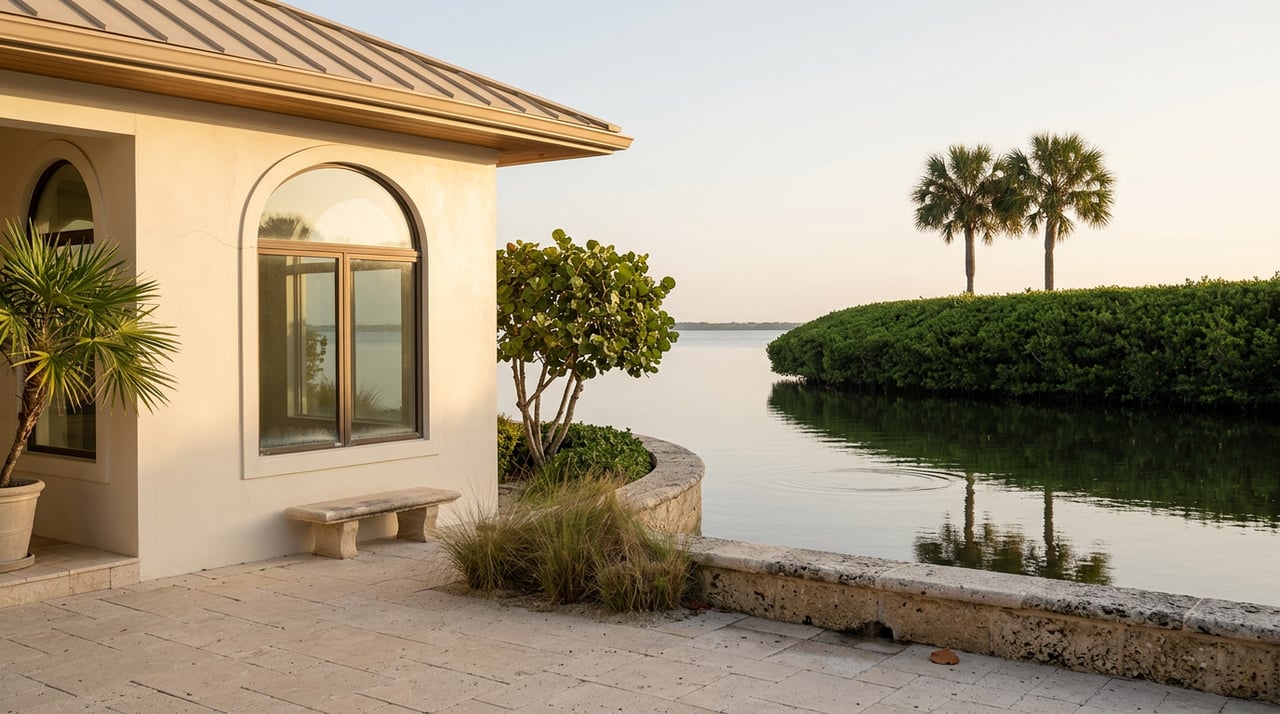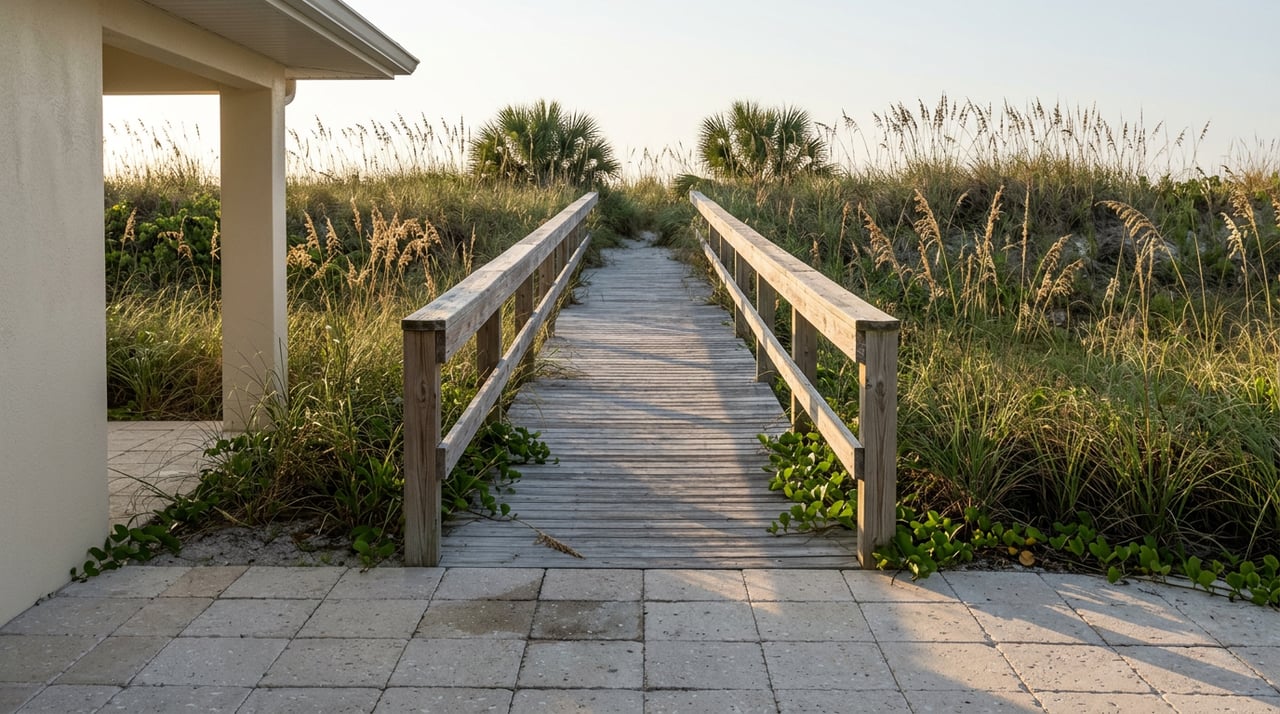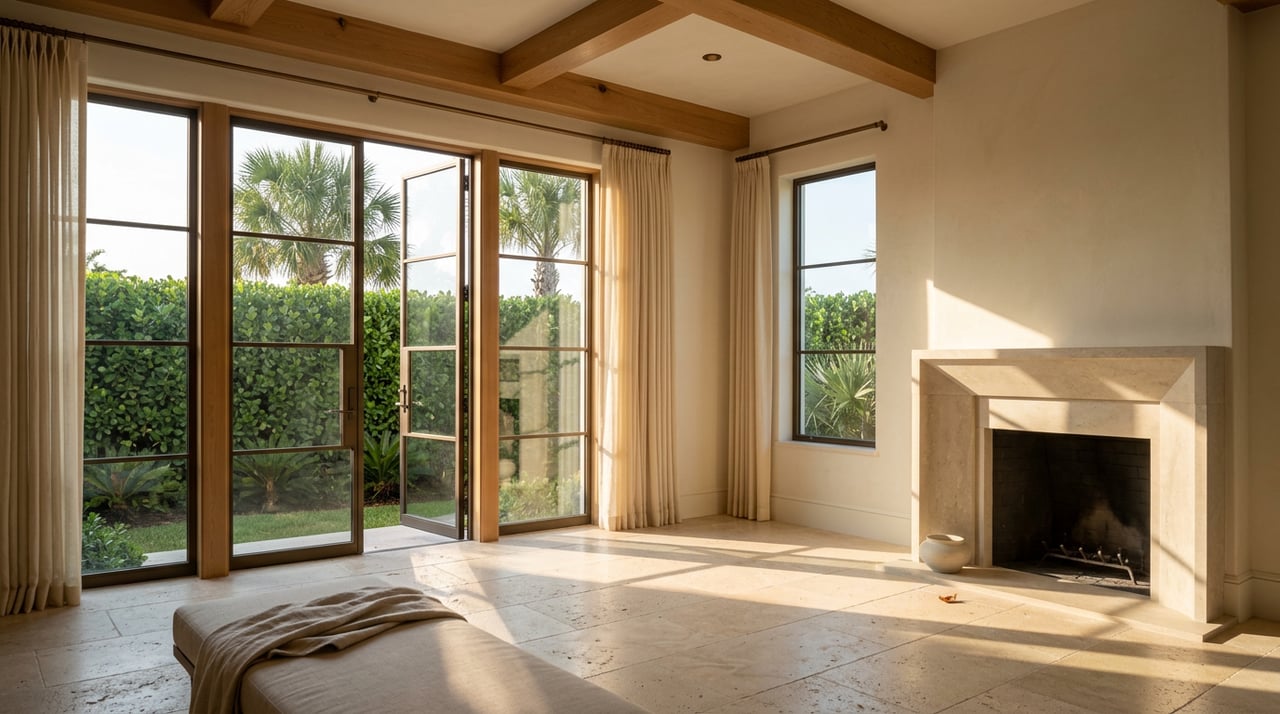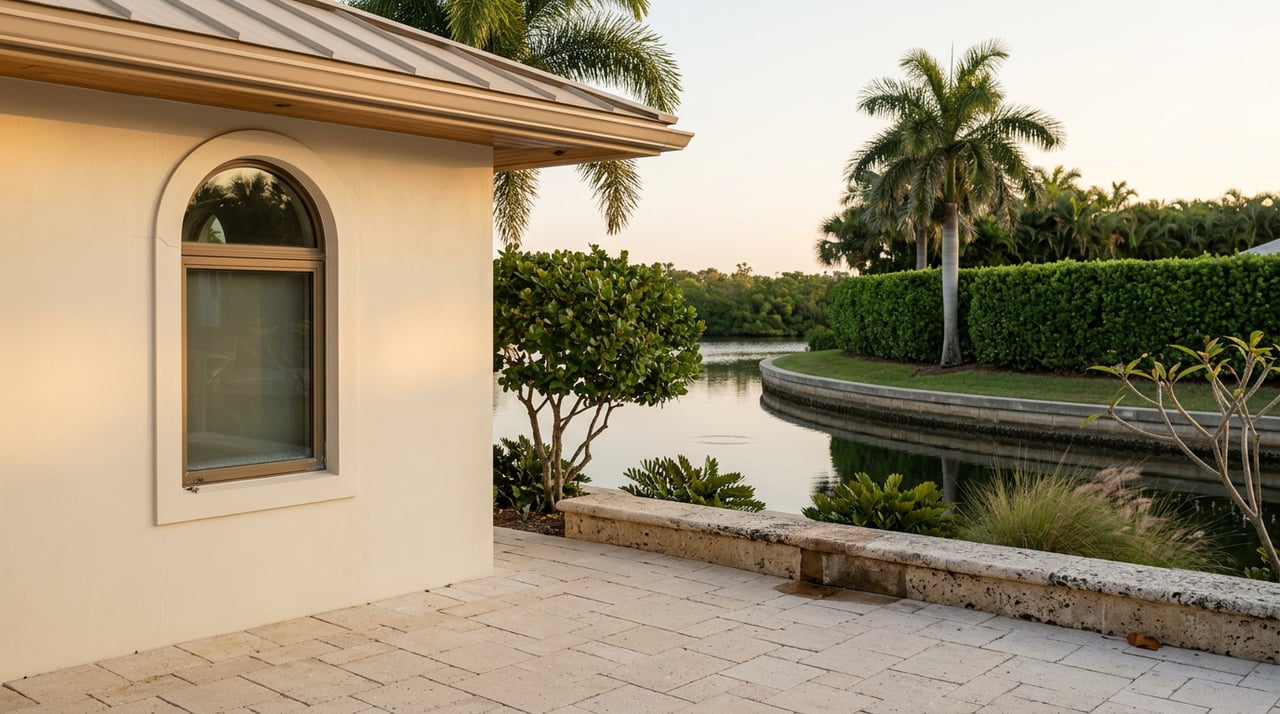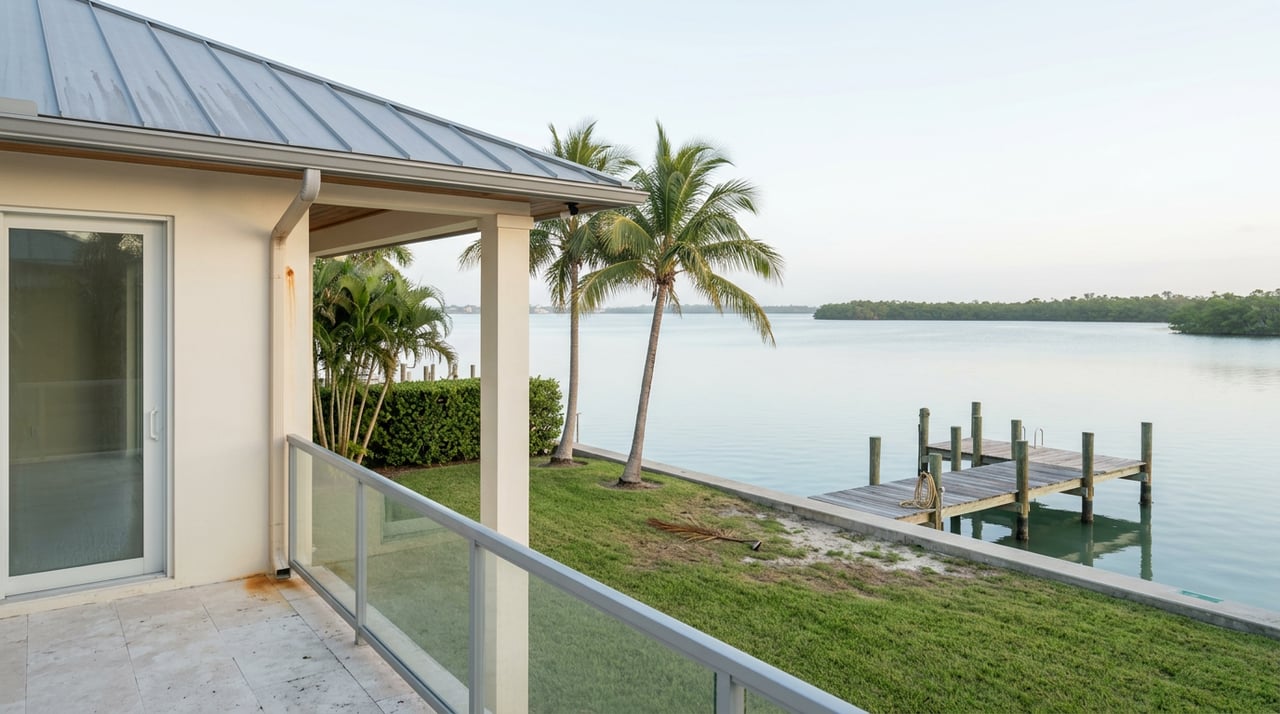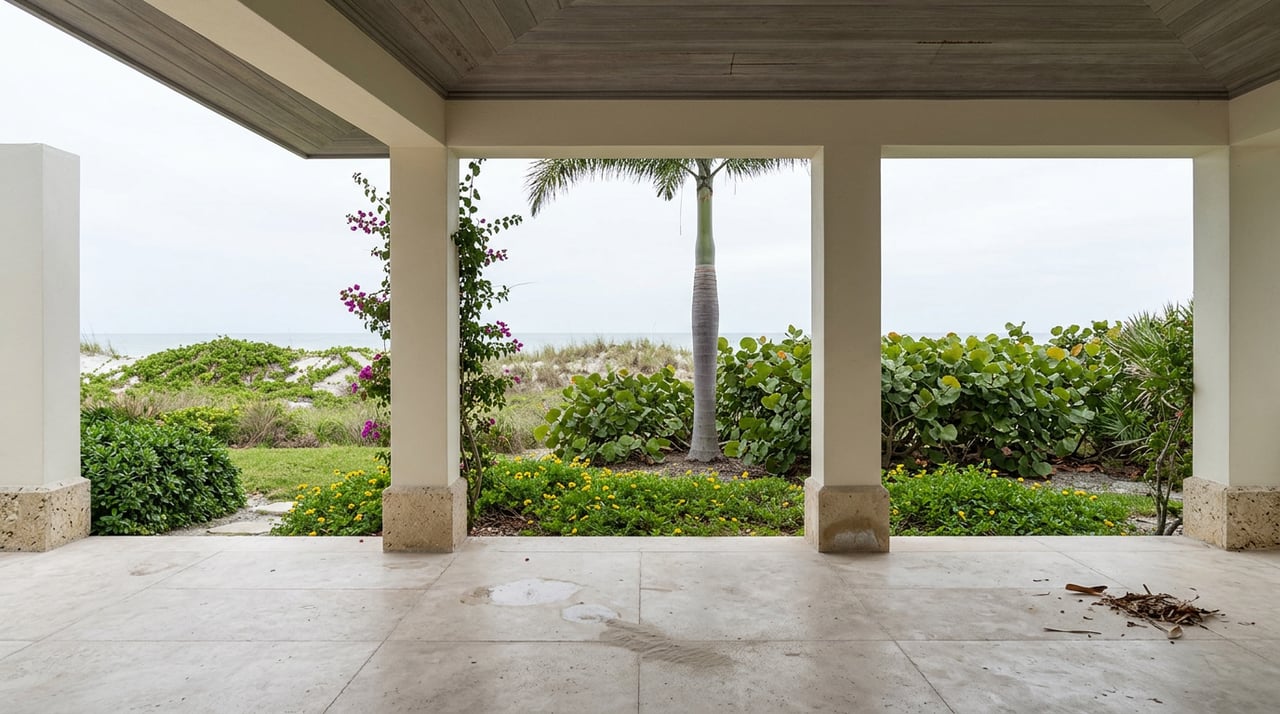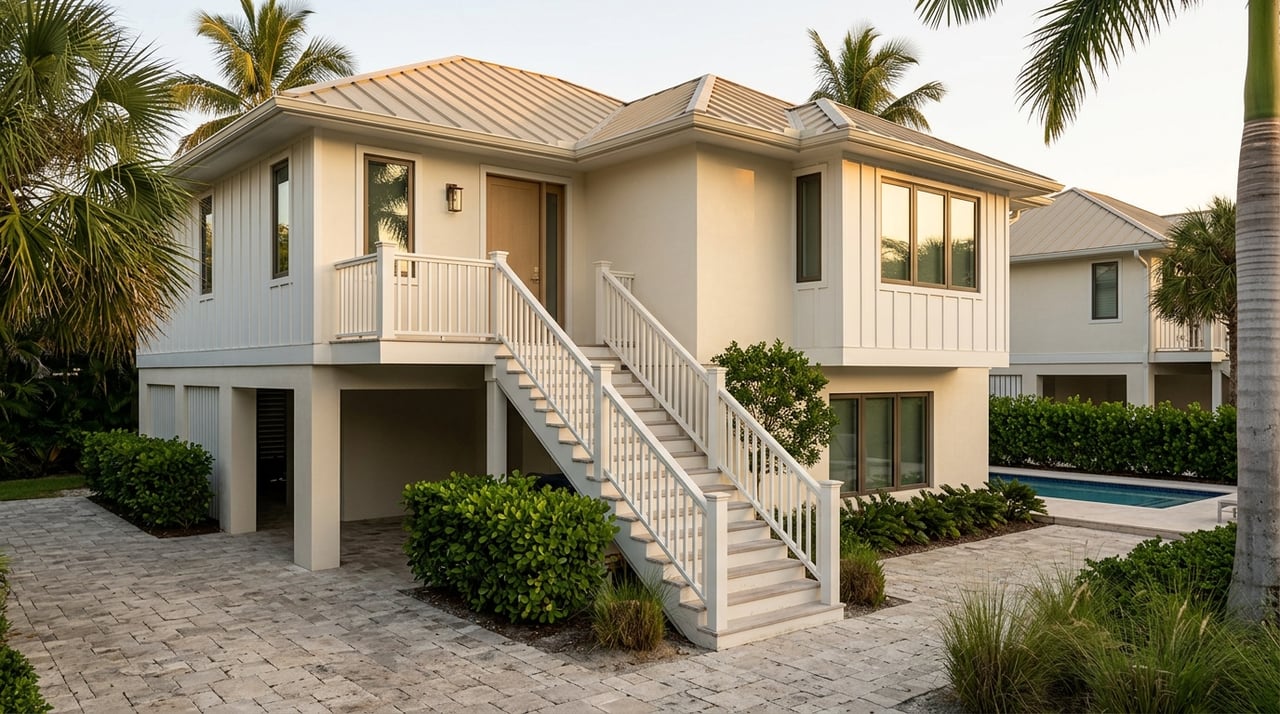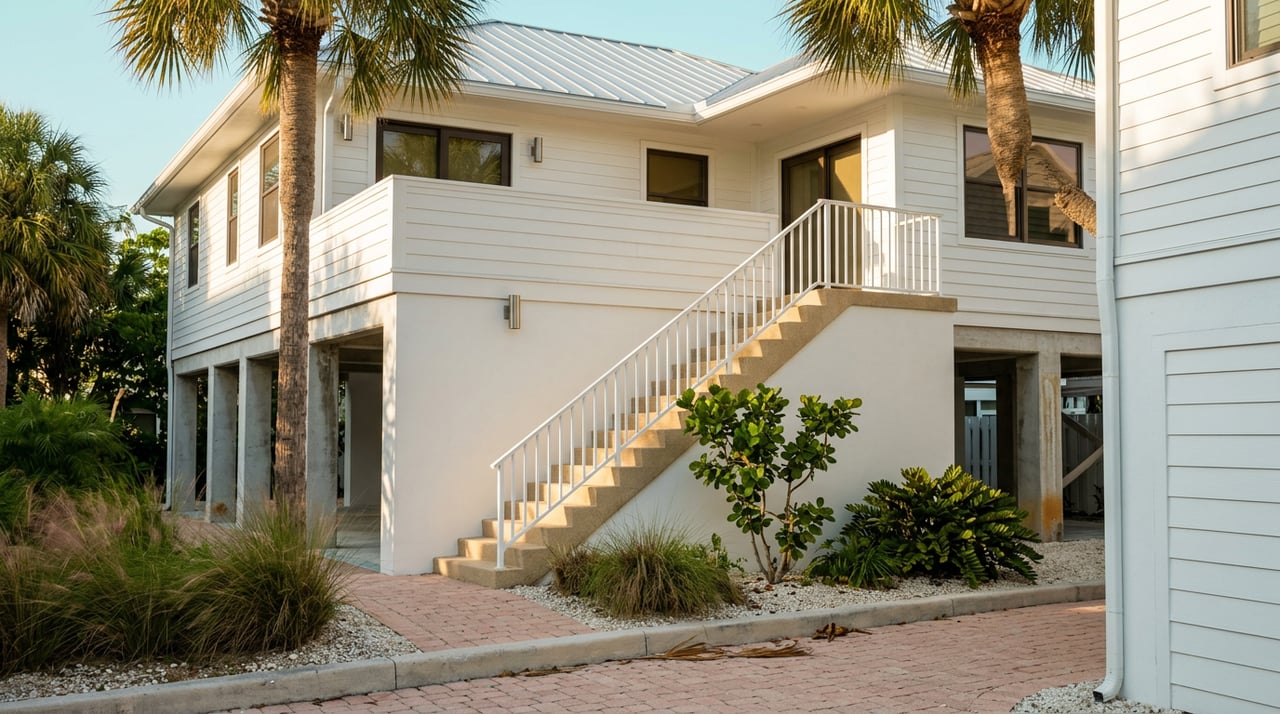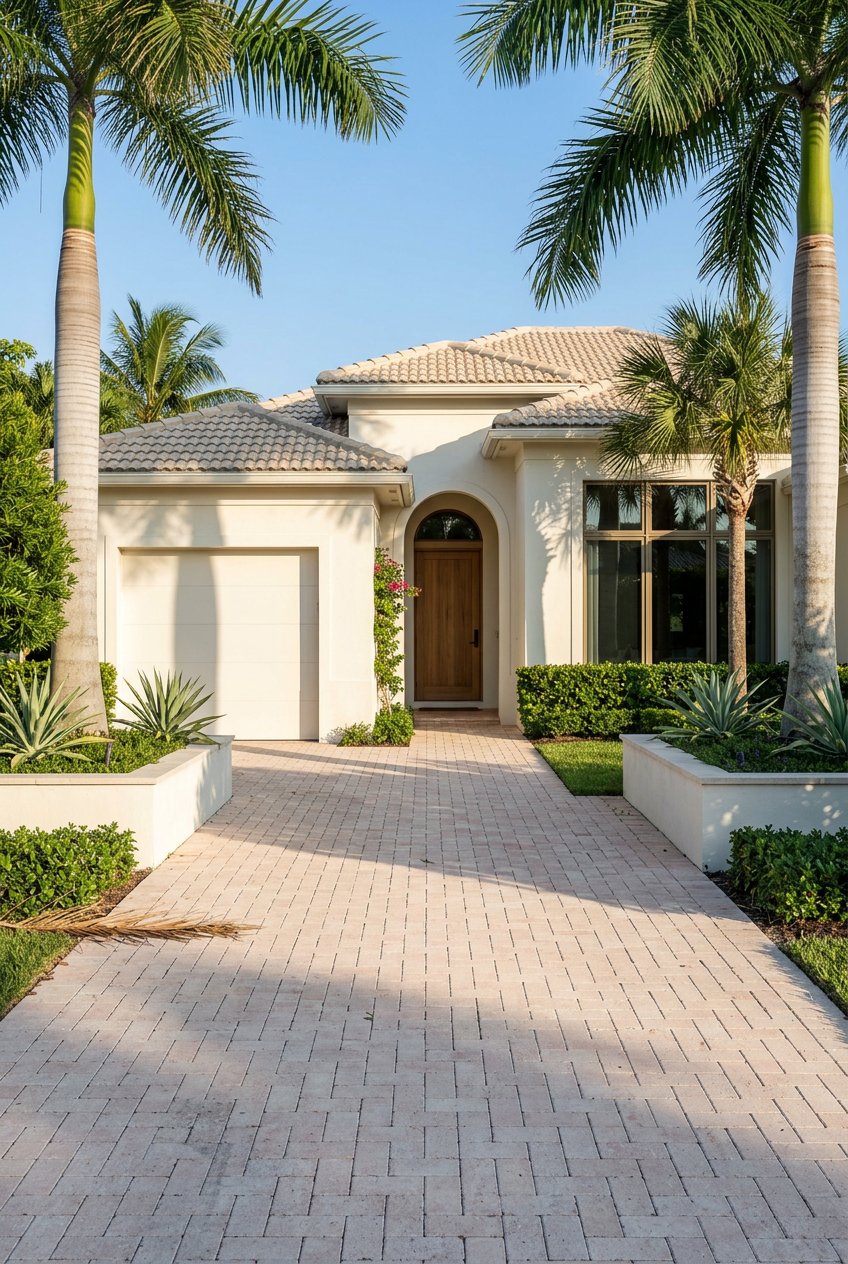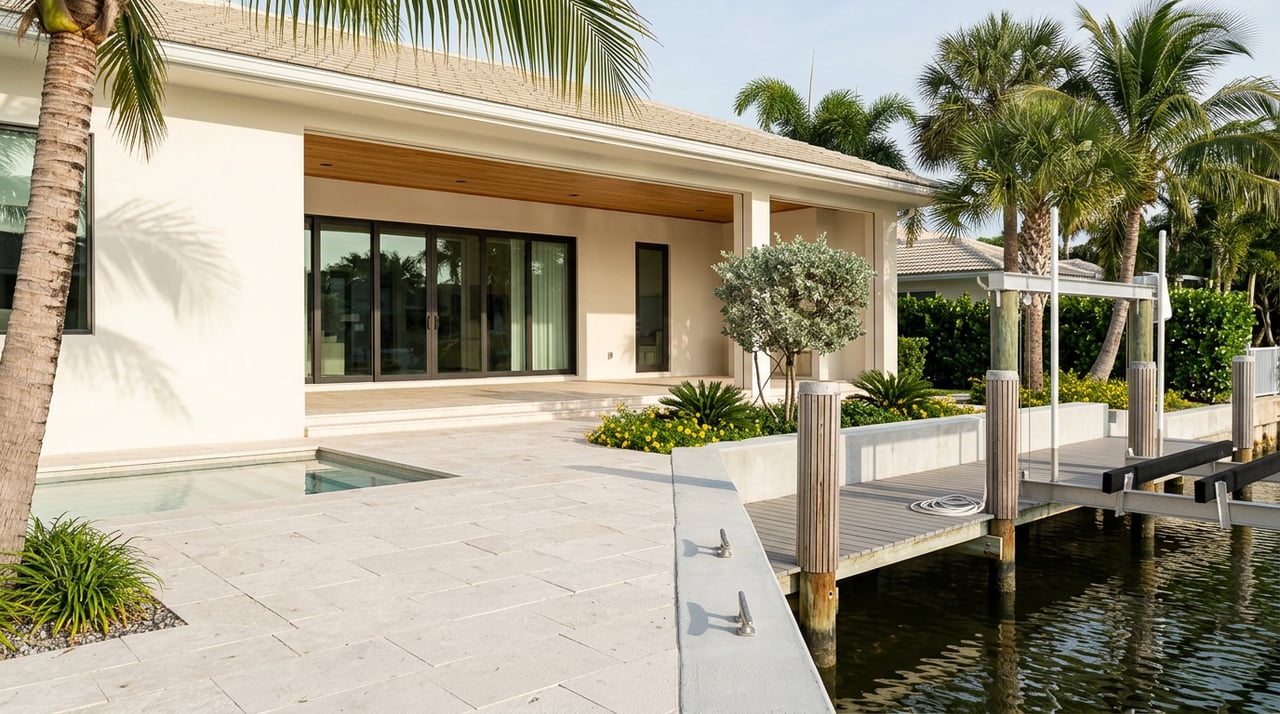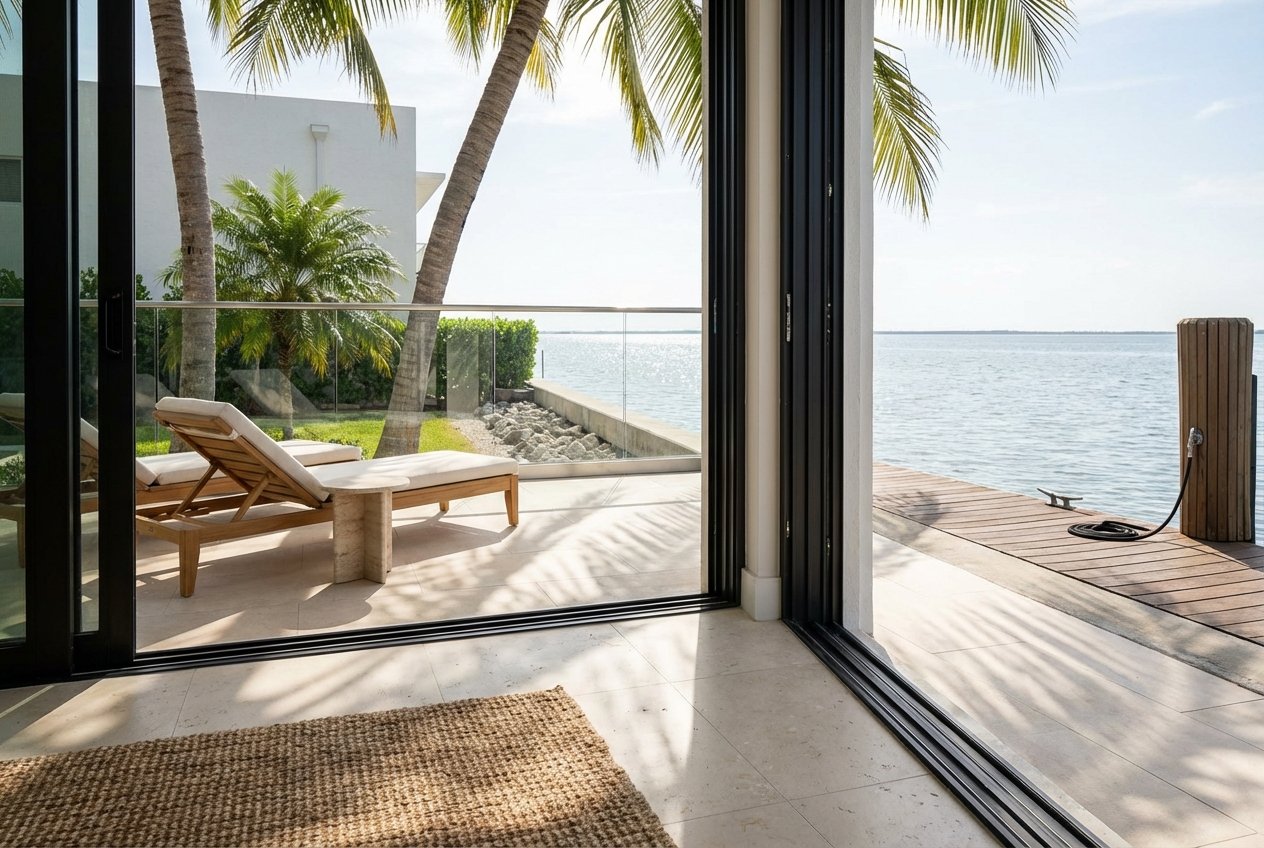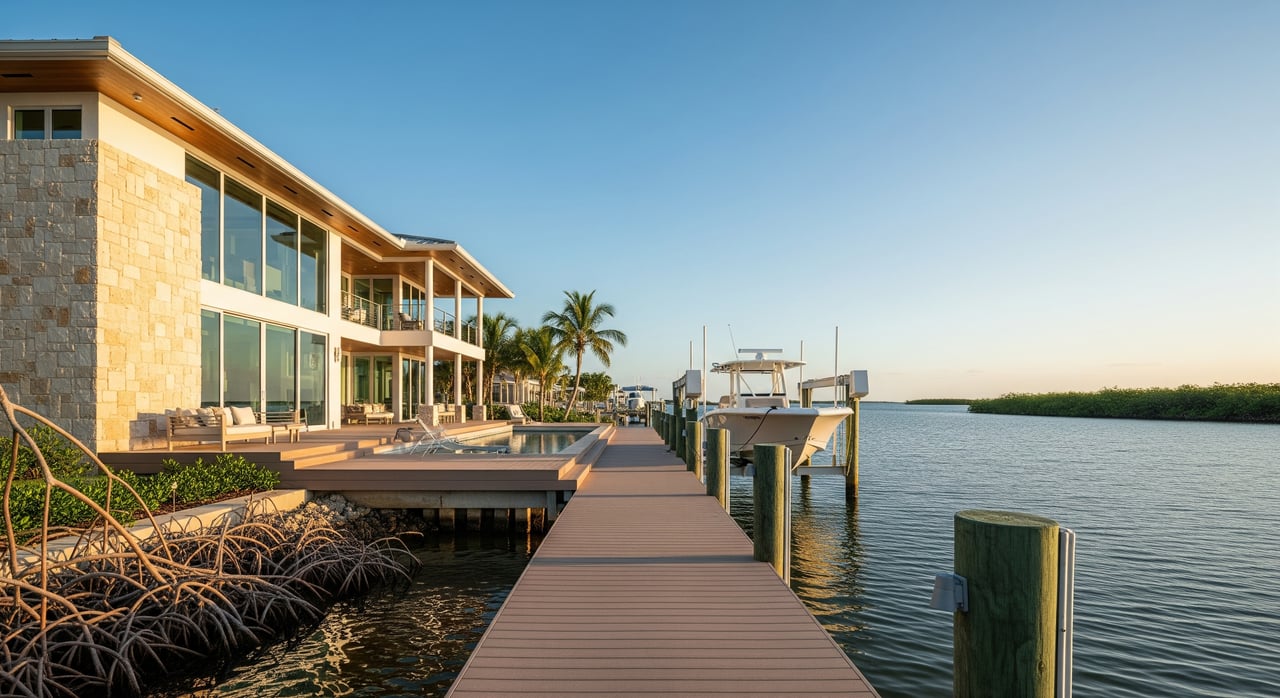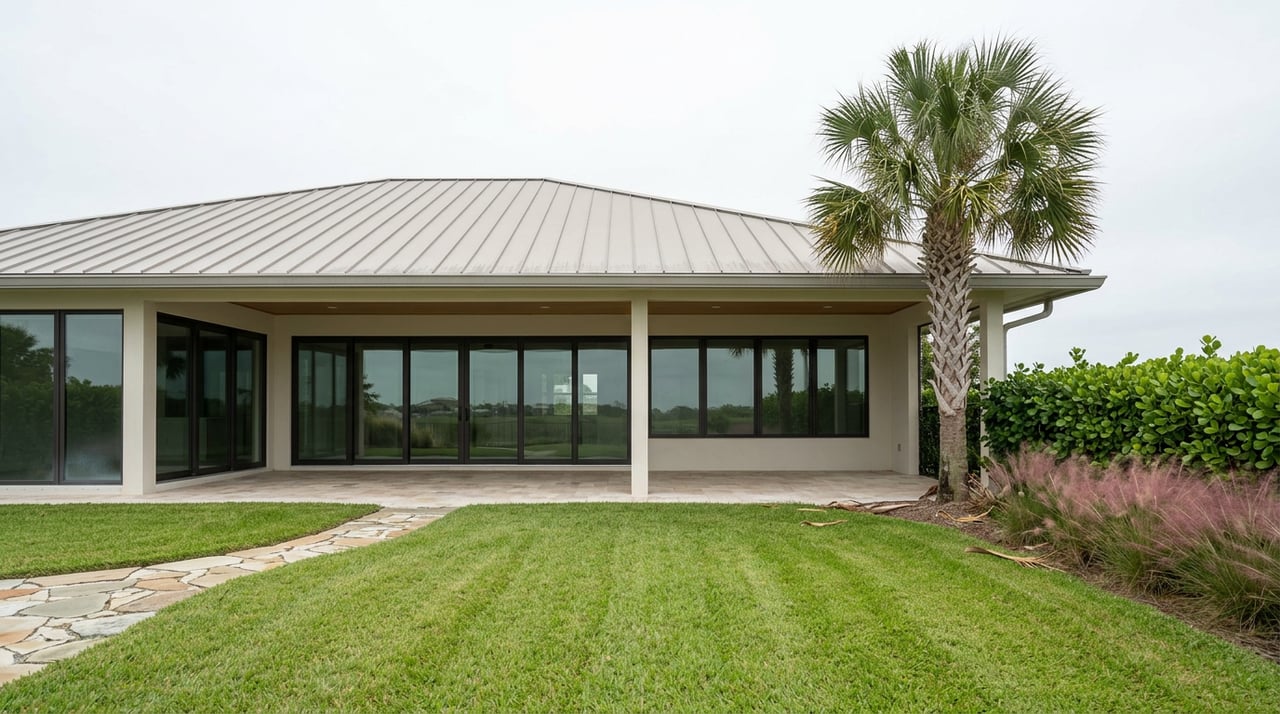
Two owners in the same twelve-house cluster call their insurance agent this fall. Same complex, same pool, same view of the Gulf, same elevated wood-frame construction on pilings. One gets a callback with good news: her wind mitigation credit held, maybe even improved. The other gets a request for documents he doesn't have. Same roof age. Same storm exposure. Different outcome.
The difference isn't the house. It's the paper trail.
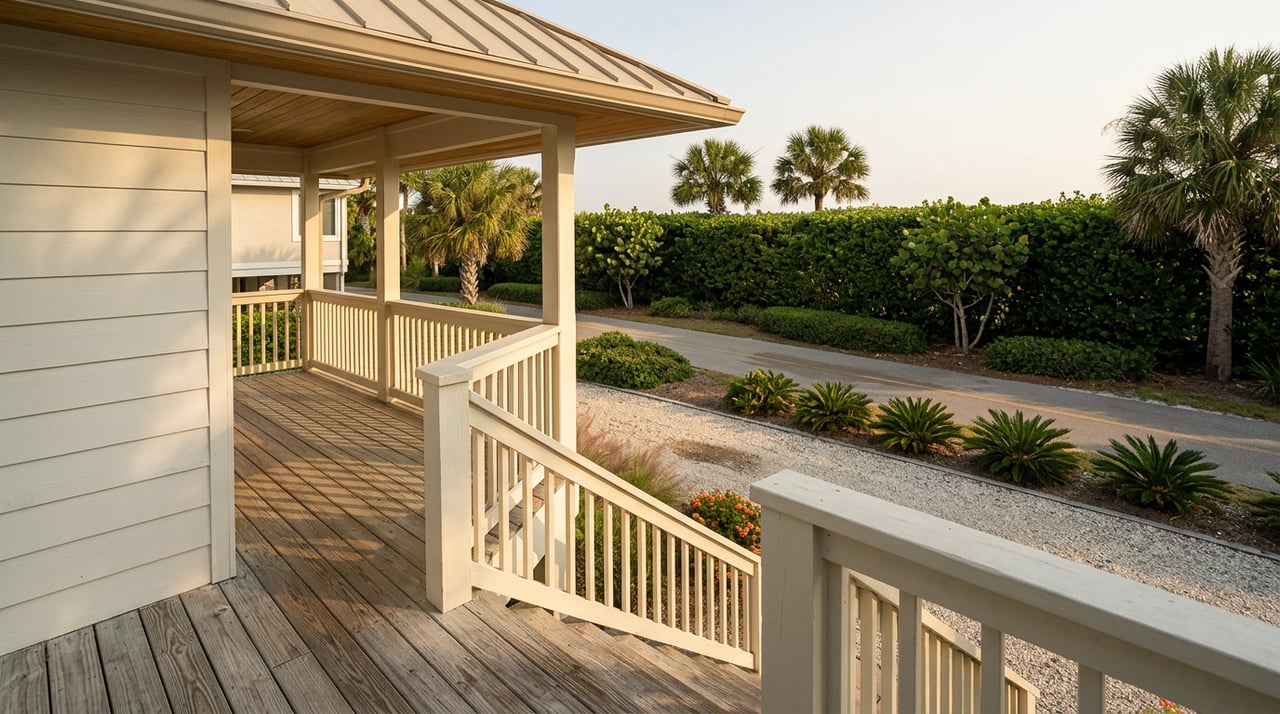
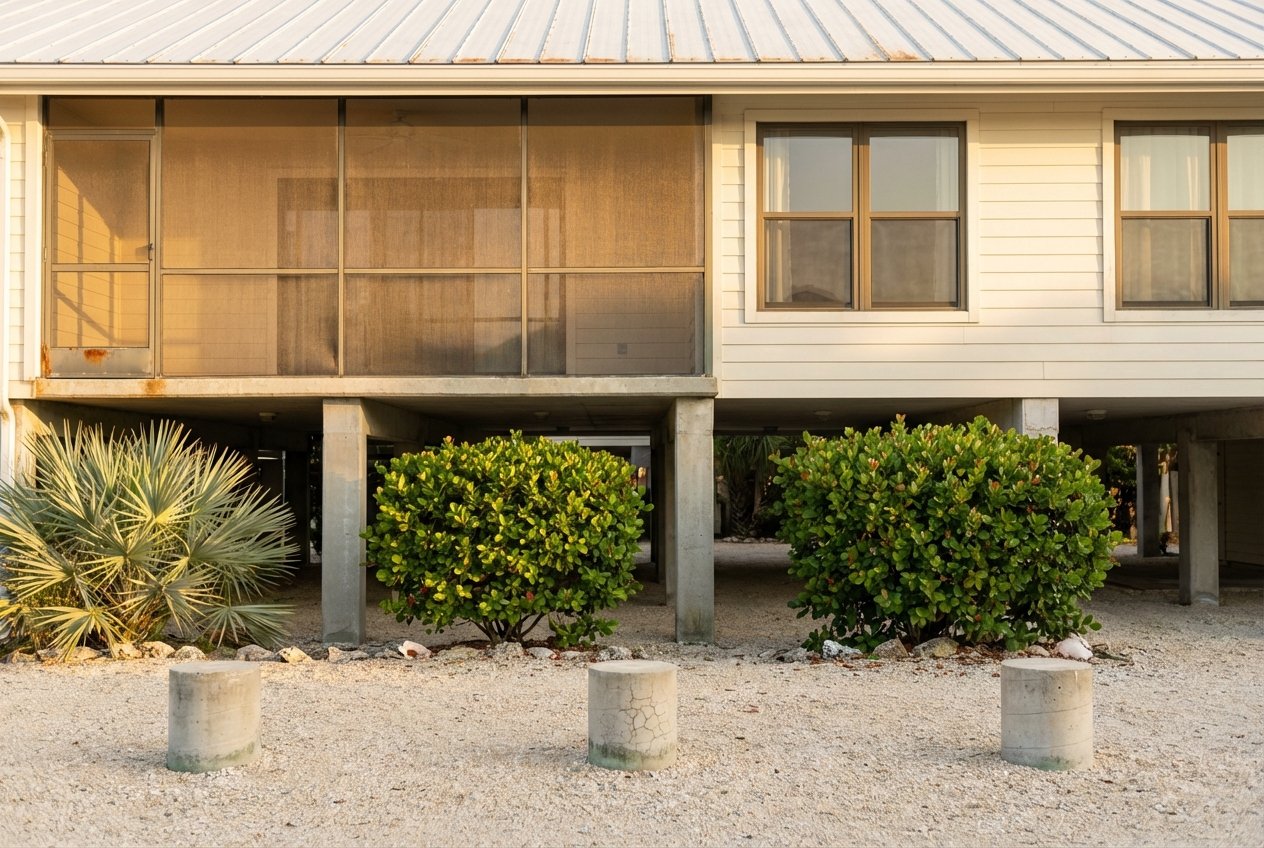
Boca Grande Shores is a cluster of twelve single-family elevated wood-frame homes about a mile and a half south of the village, three bedrooms and two baths apiece, built in the style that once populated most of the island's beachfront before Florida rewrote its wind code. That construction style is part of the charm. It's also why this specific community sits closer than most to a line the state just made harder to cross.
The form changed. The math behind it didn't move in your favor.
Florida's Office of Insurance Regulation adopted a revised Uniform Mitigation Verification Inspection Form, known by its state designation OIR-B1-1802, effective April 1, 2026. The OIR's own wind mitigation resource page confirms the update follows a 2024 loss study and adds new fields for design wind speed and roof slope. What matters more for older construction is the documentation standard behind it. According to Leane Suarez Group, inspectors can no longer note that a feature appears present. They now need permits, product approvals, and clear photographic proof for every credit claimed. Carriers didn't start applying credits calculated under the new form until July, which meant a three-month stretch where inspections used the tougher standard but the savings hadn't caught up yet. That gap has closed, but it's worth knowing it happened if you're comparing a report from this spring against one from this summer.
None of that is unique to Boca Grande. What is unique to this community, and a handful like it on the island, is Question 1 on that form: was the structure built in compliance with the Florida Building Code, 2001 edition, which took effect March 1, 2002, as Orlando Inspex explains. If your home's original structural permit predates that line, the top credit tier for Question 1 is out of reach no matter what you've added since. A new roof doesn't move the date. The credit is tied to the original permit, not the reroof permit, so a 2018 roof replacement on a 1978 structure still answers Question 1 the same way it did before the reroof.
That's the ceiling. It applies whether or not you've done a single thing to improve the house.
The floor is where the real money gets lost
Here's the part that surprises most owners: a home built before 2002 can still earn meaningful credits for roof-to-wall connections, secondary water resistance, and opening protection. Those are separate questions on the form, and they reward what's actually in the structure, not when it was permitted. Metal clips instead of toe-nails. Peel-and-stick underlayment under the shingles. Impact-rated windows or code shutters. Homes of this era sometimes have these features, added during a past reroof or a storm-driven retrofit nobody thought to document at the time.
Under the old form, a visual inspection was often enough to credit what the inspector could see in the attic. Under the revised form, what the inspector sees has to be backed by paper. If a previous owner added hurricane straps in 2009 and never kept the invoice, that upgrade may go uncredited today, not because it isn't there, but because nobody can prove when it went in or what it's rated for. For a cluster of homes built in the pre-permit-paper-trail era, sitting on pilings that have likely seen multiple owners and multiple informal repairs over five decades, that's a real and specific risk. It isn't about whether the house is safe. It's about whether the safety is provable on a state form.
The island already knows what a bad renewal looks like
This isn't hypothetical stress. In the aftermath of Hurricane Ian, Boca Beacon reported on a Gasparilla Island couple whose renewal premium jump was severe enough to prompt them to write to the governor.
"This is a game changer for the entire island. The amount of the increase in the premium, that's the price of a down payment on a house."
Reported by Boca Beacon.
That was one household's experience years ago, not a forecast for today's market. But it's a real, local data point about how sharply premiums on this island can move when a policy gets re-underwritten, and it's the kind of swing that a missing wind mitigation credit can widen further.
The national picture has caught up to the same story. A Bloomberg feature on rising US home insurance costs, reporting that average premiums are projected to rise about 4 percent in 2026 after a 12 percent jump in 2025, ran with a photo of storm damage to a pool and house in Boca Grande following Hurricane Milton in 2024. The island wasn't cited as an example. It was the picture.
What this means if you're listing or buying at Boca Grande Shores this year
If you own one of these homes and you're weighing a sale, the order of operations matters:
- Find your original structural permit, or ask Lee County for the record if you don't have it on hand. This settles Question 1 before anyone else asks.
- Locate your most recent wind mitigation report and check its date against April 1, 2026. A report completed before that date is likely still valid for up to five years, according to Florida CFO guidance, but a buyer's insurer may request a fresh one on the new form regardless.
- Pull together whatever documentation exists for any retrofit work: roof replacement permits, receipts for hurricane clips or straps, product approval numbers for windows or shutters. If a past owner did the work but the paperwork is gone, a new inspection may still be able to verify some features by direct observation, but expect the revised form to ask for more than a look.
- If you're buying, ask for the current report before you write an offer, not after. If it predates April 1, 2026, it's likely still technically valid under the five-year rule, but carriers have been calculating credits under the new documentation standard since July, so an older report may not reflect what actually shows up on a fresh quote.
Here's the timeline in one place:
| Date | What changes |
|---|---|
| March 1, 2002 | Florida Building Code 2001 edition takes effect. Question 1 on the wind mitigation form uses this as the baseline. |
| April 1, 2026 | Revised OIR-B1-1802 form becomes mandatory for new inspections statewide. |
| July 2026 | Insurers began applying credits calculated under the revised form. |
None of this changes what these homes are worth as a place to live. It changes what a seller needs on hand before listing, and what a buyer needs to ask for before closing.
Frequently asked questions
Does replacing the roof reset my Question 1 answer on the wind mitigation form? No. The credit ties to the original structural permit date, not the date of a later reroof. A newer roof can still earn credit on other parts of the form, but it won't move a pre-2002 home into the higher building-code tier.
If my current wind mitigation report predates April 2026, do I need a new one right away? Not automatically. A completed report is generally valid for up to five years as long as no material changes have been made to the structure. Some insurers may still request an updated report on the new form as part of a renewal or a new policy at sale.
Is Boca Grande Shores in a flood zone, and is that the same issue as wind mitigation? They're separate coverages. Wind mitigation credits apply to the wind portion of a homeowners policy. Flood insurance is a distinct policy, and barrier island properties typically carry their own flood zone considerations that should be reviewed on their own terms with your insurance agent.
If you're thinking about listing at Boca Grande Shores, or you're circling this community as a buyer, the paperwork conversation is easier to have before a contract is signed than after. The Moore Team works this stretch of the island closely enough to know which communities carry this kind of documentation risk and how to get ahead of it. Book a Private Consultation and we'll walk through what your specific home's file looks like before you're staring down a renewal surprise.
This article is general information, not legal, tax or financial advice. Consult a qualified professional about your situation.