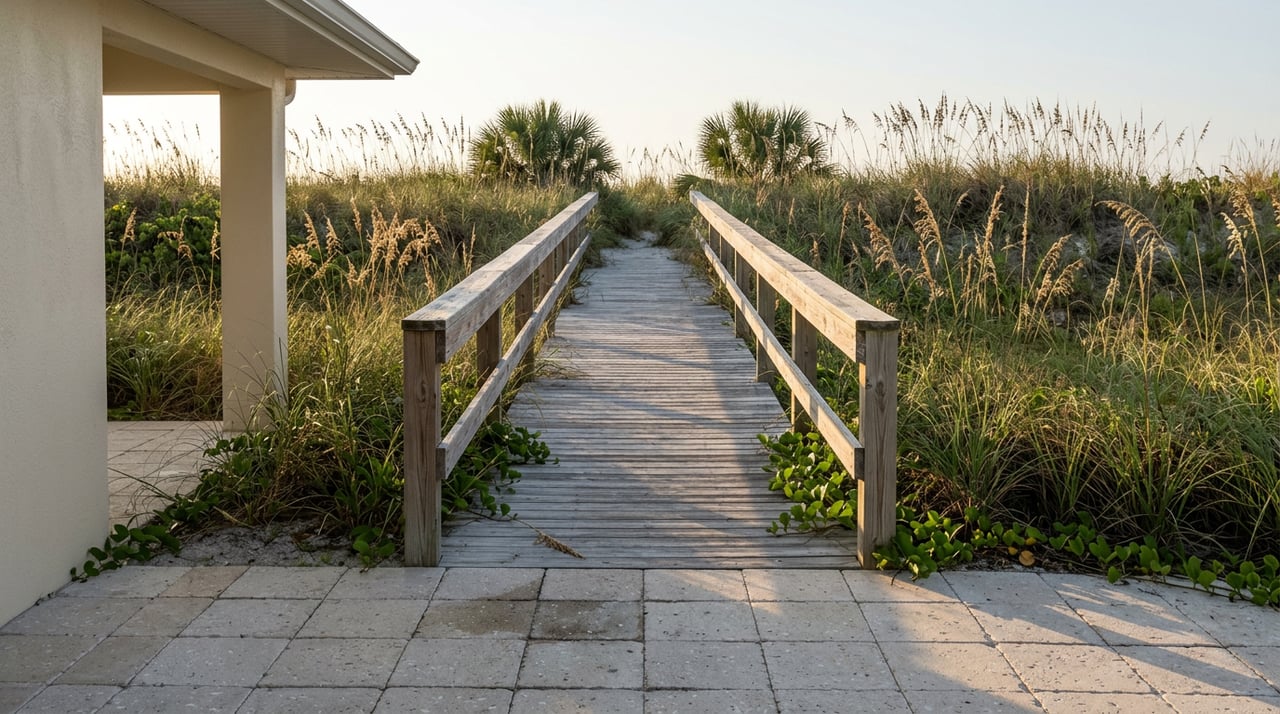
The course that reopened on December 12, 2024 is not the one you played before Hurricane Ian. That distinction matters more than it sounds, and it changes what you should expect when you walk across the one-lane bridge to the first tee this month.
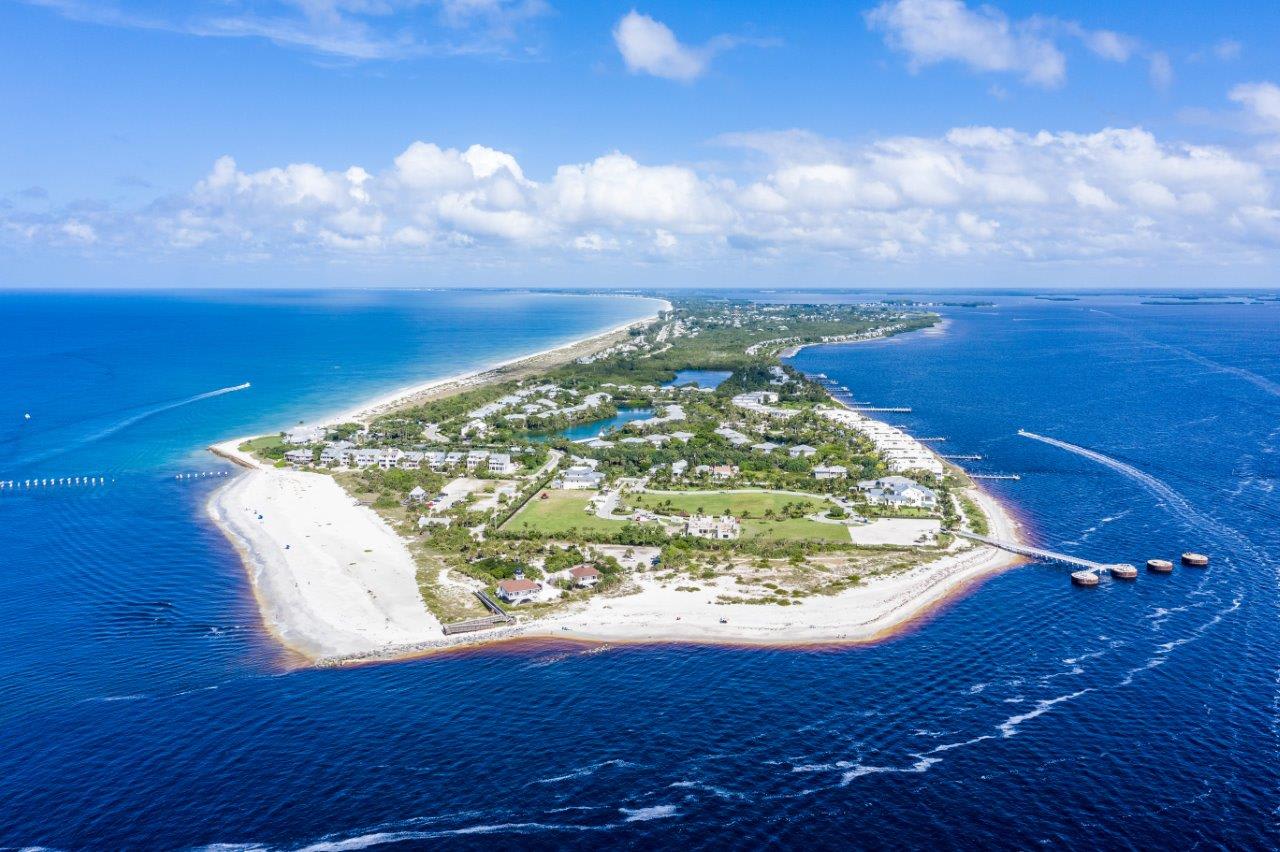
Most members and regular guests are carrying a mental model of the Gasparilla Golf Club that is two storms out of date. The course sitting on Charlotte Harbor right now — freshly grassed, re-irrigated from scratch, with Tripp Davis's restoration of Pete Dye's original 2004 design finally allowed to settle in — is playing its first complete spring season. March 2026 is the opening chapter of that version of the course, and the window to experience it without competition for starting times closes sooner than most people on the island realize.
After Two Storms, a Different Course
Hurricane Ian made landfall on Gasparilla Island in October 2022 and closed the course entirely. The Gasparilla Inn brought in architect Tripp Davis — whose firm is regarded as one of the leading golf course restoration practices in the country — to rebuild rather than repair. Davis and Director of Agronomy Elliot Garrison regrassed the entire property with a new variety of Seashore Paspalum, a salt-tolerant, low-input grass selected specifically for the island's coastal exposure. They replaced the existing irrigation infrastructure with a new system using HDPE piping rather than re-used PVC, a change Garrison noted "communicates directly to each individual sprinkler head" and is engineered for a life expectancy of more than fifty years.
The course recovered. Then Hurricane Milton arrived in October 2024.
What saved the timeline was the work that had already been done. Because the agronomy team had just rebuilt the course from the ground up, recovery from Milton came quickly — golfers were welcomed back on December 12, 2024. Director of Golf Robert Duke described the outcome as a continuation of a tradition that has "continued for over a century."
The practical implication: the turf and irrigation system you are playing on today are, in most meaningful ways, two years old and purpose-built for this environment.
What the New Grass Changes
Seashore Paspalum performs differently from the Bermuda grass that most Florida golfers know. It holds firmer in wet conditions, recovers faster from divots, and tolerates the salt intrusion that a Charlotte Harbor shoreline course cannot avoid. In March, before summer humidity thickens the air and afternoon thunderstorms become daily events, the new Paspalum plays at its most consistent — ball lies are clean, and the smaller perched greens that Golf Digest's panel has called "difficult enough for the low handicapper to score but fun enough for the high handicapper" reward a precise approach rather than punishing it.
The no-tee-times policy has always been the course's most underappreciated feature. As Golf Digest's current course profile notes, Gasparilla Golf Club is "open to members and guests of the resort" and play is walk-up. In March, before The Gasparilla Inn's Springtime Golf Getaway packages begin filling rooms on April openings, the pace of play reflects the island's actual rhythm rather than a resort at capacity.
The Holes That Require a Different Strategy Now
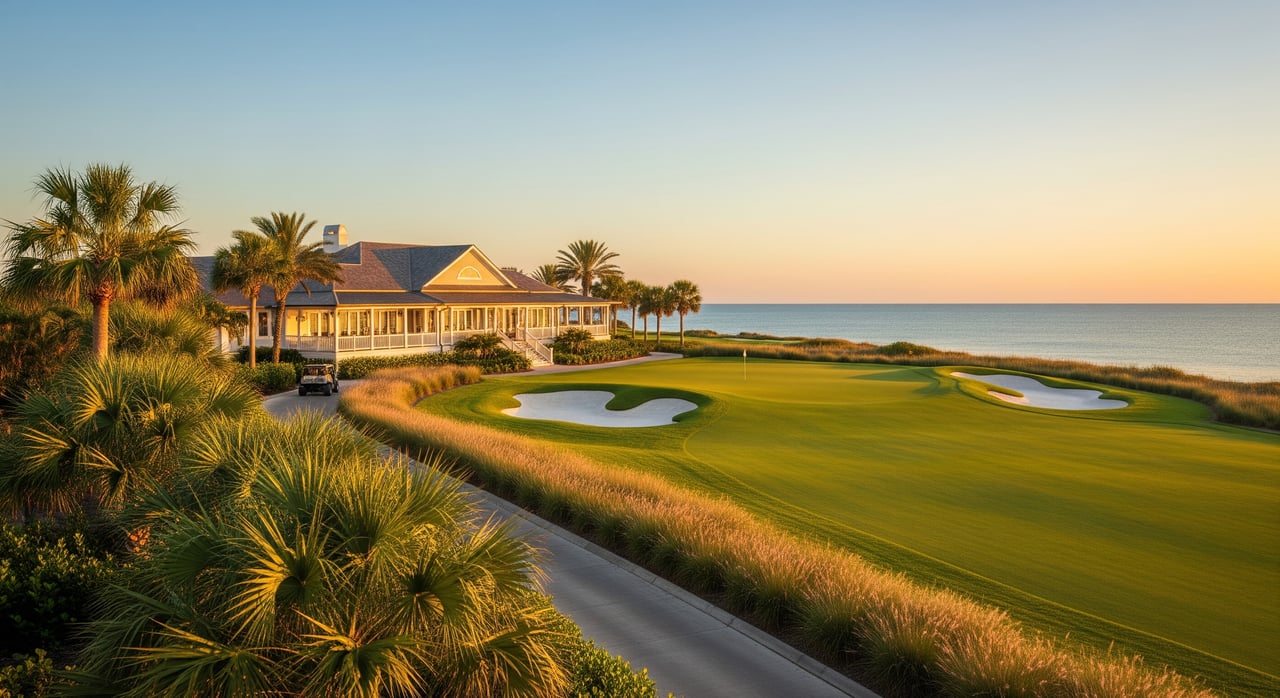
Five holes run directly along the Charlotte Harbor shoreline, and the stretch from holes 12 through 17 places tee boxes and greens steps from the water. Golf Digest draws a direct comparison to Pete Dye's seaside designs at Teeth of the Dog and The Ocean Course at Kiawah Island — not in scale, but in the way wind shapes the strategic problem on every shot.
Pete Dye himself was particularly attached to hole 15, a par-4 dogleg left that uses the harbor views as both scenery and psychological weight. The hole plays differently depending on the direction of the Charlotte Harbor breeze, which in March tends to arrive from the southwest — a crosswind on the approach rather than the headwind that summer southerlies can produce.
The course's statistical extremes also tell a tactical story. Hole 16, a par-5 that plays to 541 yards from the back tees, is the longest hole on the property. Hole 17 answers it immediately: a par-3 at 167 yards, the shortest. That sequence — one hole demanding distance management, the next demanding precision under wind — is the kind of architectural conversation that rewards players who have read the course rather than just memorized yardages. With new Paspalum fairways, the 16th's playing surface is firmer and more consistent than it was in the years before the restoration, which changes how much you can rely on run-out on a downwind day.
Hole 8, the course's number-one handicap hole, is a 442-yard par-4. It has not gotten shorter with the renovation.
Why the Calendar Creates the Opportunity
Tarpon begin arriving on the deep flats around Boca Grande Pass in April, and by May through July the Pass is running at full capacity. The island's energy shifts in a way that anyone who has been here across multiple seasons knows viscerally — the causeway traffic pattern changes, the docks fill earlier in the morning, and the calendar at every venue on the island rotates around the fish rather than around golf.
That seasonal transition compresses the spring golf window. April opens with The Gasparilla Inn's Springtime Golf Getaway package — daily 18-hole rounds with a cart, starting at $870 per room per night — and a separate Condé Nast Traveler Gold List celebration package available Sunday through Thursday in April, May, and June 2026. Both packages bring guests onto the property who are specifically coming to golf, which changes the casual, walk-up character of the course.
The Gasparilla Inn earned the Condé Nast Traveler Gold List recognition for 2026, which is the first year the distinction has coincided with the post-restoration course. That combination — national recognition plus a rebuilt course that is now past its establishment phase — is likely to increase demand through the spring season in a way that the course has not experienced before.
Golf Digest currently ranks Gasparilla Golf Club 52nd among Florida courses for 2025–26, down slightly from its 47th ranking in 2023–24. That modest drop in a competitive ranking happened during the years the course was closed or in active recovery. The more instructive number is what the ranking will look like in 2027–28, when the restored course has had a full two seasons of evaluations behind it.
March Has Always Been the Quiet Peak
There are no stoplights on Gasparilla Island. There are no chain restaurants. The course has no tee sheet to scroll through and no ranger timing your group against a standard. What the island offers is a pace of life that most golfers encounter at this course and then try, unsuccessfully, to replicate elsewhere.
Head Golf Professional Andy Bell and the staff at the Golf Club operate on that same frequency. Lessons are available by request; rental clubs are on hand; the halfway house and small clubhouse provide lunch without ceremony. The course is exclusive to Inn guests and members, which means the field on any given March morning is composed of people who chose this island specifically, not people who ended up here.
That self-selection has always made the Gasparilla Golf Club feel different from courses with similar rankings on paper. What is different in March 2026 is that the physical course now matches the experience — newly built from the ground up, playing its first full spring, ranked among the best in Florida, and sitting quietly in the window before the tarpon and the full weight of the season arrive.
The one-lane bridge to the first tee is still there. The breezes off Charlotte Harbor have not changed. Everything underneath them has.
If you are considering a property on Gasparilla Island — or selling one — The Moore Team brings generational knowledge of this island to every transaction. Book a private consultation to talk through the market on your terms.